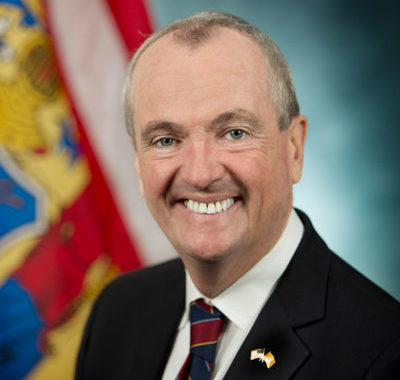
TRENTON – Right before the midnight buzzer of July 1, Governor Phil Murphy signed off on the Fiscal Year 2026 Appropriations Act, and to say it gained a few pounds is an understatement.
The next budget governing New Jersey’s spending came to life in February when Murphy made a $58.1 billion proposal. Since then, it ballooned to roughly $58.8 billion, with $400 million of that getting stuffed in over the weekend after a budget committee review.
One thing is for sure, Murphy couldn’t care less, as he is term-limited and whatever pitfalls to come with the most expensive budget in the state’s history is of no concern to him.
The $58.78 billion Fiscal Year 2026 (FY2026) budget, which was passed by the Legislature earlier on June 30, redirects over 75 percent of the total budget back into communities in the form of grants-in-aid for property tax relief, social services, higher education, as well as State aid to schools, municipalities, and counties.
The budget includes an all-time high level of direct property tax relief for homeowners and renters, yields the highest level of school funding in history, and delivers a fifth consecutive full pension payment. It also prioritizes quality health services for women and families, and it invests in beginning to fully modernize NJ Transit’s fleet.
“This budget exemplifies our dedication to fiscal responsibility, affordability, and opportunity for all New Jerseyans,” said Governor Murphy. “Over nearly eight years in office, we have maintained a steadfast commitment to building a stronger and fairer New Jersey and righting our fiscal ship. I’m proud that this budget caps off an eight-year journey to turn our state around and delivers greater economic security and opportunity to every family. With the help of our legislative partners, we are moving New Jersey toward a brighter future for every child, student, worker, parent, and senior citizen who calls our great state home.”
“The budget upholds our administration’s promise to make sure that New Jersey remains the best state in the nation to live, work, raise a family, and retire,” said Lieutenant Governor Tahesha Way. “Over the past seven and a half years, we have made historic strides in making our state more affordable for hardworking residents and families through expanded tax relief and major investments in affordable housing, social services, and education. This state budget is a direct result of the strong collaboration between Governor Murphy, Treasurer Muoio, and legislative leadership.”
“This is a fiscally responsible budget that puts New Jersey families first. At a time when working people are being left behind by misguided decisions in Washington, we’re making smart, strategic investments that deliver meaningful support, especially through historic property tax reductions, strong funding for public education, higher education, healthcare, transit, and a full pension payment,” said Senate President Nick Scutari, Senate Majority Leader M. Teresa Ruiz and Senator Paul Sarlo, Chair of the Senate Budget Committee. “We’re grateful to Governor Murphy and our colleagues in the Legislature for coming together to enact a disciplined, forward-looking budget that safeguards essential services, expands opportunity, and reinforces New Jersey’s long-term fiscal strength.”
Of course, not everyone was happy with the budget.
“Our budget process is an absolute mess and frankly, a new Governor and a new approach to budgeting can’t come soon enough,” said GOP Sen. Declan O’Scanlon, who serves as a budget officer. “After seven years of tax increases that have made New Jersey more unaffordable and hostile to job growth, we’re now staring down a $3 billion structural deficit, a public employee health benefits system in a financial death spiral, a school construction fund that’s completely broke, and an unworkable state-mandated housing law that’s burying local taxpayers. Combine that with the pathetic lack of transparency and skyrocketing spending and you have a recipe for disaster that we’re seeing play out in real time.”
“It should come as no surprise that Democrats are running out the clock so they can drop a bloated, pork-filled budget in the dead of the night,” said GOP Sen. Michael Testa. “This secretive, sloppy budget process is a disaster and it has been a mess for the last seven years. Democrats are again raising your taxes, hiking fees, unconstitutionally jacking up healthcare costs for public employees and school property taxes, and making the State’s structural deficit even worse than it already is. This behavior is not governance; it is a slap in the face to every New Jerseyan who is forced to foot the bill for the Democrats’ failed policies.”
Here now is what the Governor’s office feels the budget will do:
Fiscal Responsibility
The budget once again provides a full payment to the pension systems. This year’s $7.2 billion payment marks the fifth year in a row Governor Murphy has fully funded the systems. Total pension contributions by the Murphy Administration are on track to exceed $47 billion – nearly four times the $12.2 billion in total contributions of the previous six governors combined.
With an eye toward ensuring New Jersey remains prepared for the future, this budget provides a surplus of $6.7 billion, more than ten times larger than the average surplus under the previous administration.
Additionally, the budget includes $788 million in funding from the Corporate Transit Fee dedicated to support NJ Transit and builds upon $1.358 billion in interest saved by taxpayers over the last four years by paying down debt and minimizing new debt taken on.
The budget also includes several tax policy changes, including increases for the highest tier of realty transfer fees, sports betting, and cigarettes and vaping, as well as a new exemption for small business investment and reforms to the Angel Investor Tax Credit.
These changes, along with the cuts in appropriations, help ensure that revenues are more closely in line with expenditures.
Affordability and Economic Security
Continuing efforts to make New Jersey affordable for all, this budget includes nearly $4.3 billion in direct property tax relief for New Jersey homeowners and renters, including $2.4 million for the continuation of the popular ANCHOR program, which last year delivered more than $2.2 billion in property tax relief to nearly two million residents. The budget also continues the Senior Freeze program, with a $239 million allocation to benefit more than 235,000 taxpayers.
The budget also includes additional funding for the landmark Stay NJ program, allocating $600 million in resources to significantly reduce property taxes for more than 432,000 senior homeowners. Stay NJ is expected to launch for the 2025 tax season and will reimburse eligible seniors for up to 50 percent of their property tax bills.
Continuing the focus on making the state more affordable for working and middle-class families, the budget maintains recent expansions of the Earned Income Tax Credit, the Child and Dependent Care Tax Credit, and the Child Tax Credit.
The tax relief included in this budget brings the total relief provided by the Murphy Administration and our partners in the Legislature to more than double any prior administration.
Continuing efforts to provide quality health services for all, a top priority of this administration, the budget includes $165 million for the continuation of Cover All Kids; $55.4 million for the Pharmaceutical Assistance to the Aged and Disabled (PAAD) and Senior Gold programs, helping more than 149,000 seniors and residents with disabilities; $52 million for family planning services and reproductive health programs; and $35.8 million for Family Connects NJ, which has provided nearly 2,500 free in-home nurse visits to families with newborns and is now available in 11 counties; and $52 million for family planning services and reproductive health programs.
The proposal also includes $10 million for a new initiative to provide State employees with full pay while they take family leave to care for a newborn, adopted, or fostered child.
Supporting the Next Generation of New Jerseyans
Last year, Governor Murphy became the first Governor to fully fund the K-12 school funding formula. This budget builds on that commitment, providing record-high school funding in FY2026. The budget includes a record $12.1 billion for K-12 schools, a nearly $4 billion increase since FY2018. This budget also addresses feedback from school districts by capping losses in major school aid categories and reducing input volatility, ensuring no district sees a steep reduction in aid from one year to the next. A district’s K-12 State aid will not decrease by an amount greater than 3% of the prior year’s State aid in the four primary categories: equalization, special education, security, and transportation.
The budget also proposes $7.5 million in new grant funding to support districts in providing high-impact tutoring to students in need of extra academic support, as well as $3 million in incentive grants for schools that want to go entirely phone-free, giving students the best opportunity to learn without distraction.
Continuing the push for universal pre-school throughout New Jersey, the FY2026 budget proposes $1.27 billion for Preschool Education Aid. Since 2018, the Murphy Administration has expanded pre-K to 229 school districts and created nearly 20,000 new seats.
Building New Jersey’s Future
In an effort to fortify our transportation infrastructure, this budget includes $1.23 billion for critical investments in State and local highway and bridge projects, and another $767 million for NJ TRANSIT to begin to fully modernize its fleet.
To ensure stability and future success for New Jersey’s institutions of higher education, this budget provides $755.2 million in institutional support for State colleges and universities, as well as $169.1 million for county colleges and $8.6 million for independent institutions of higher education in New Jersey. This totals $932.9 million, a nearly 50% increase over the $629.6 million in funding provided in FY2018.
The budget agreement also provides for $250 million in bonding for capital grants to higher education institutions. This builds on the $400 million in capital grants announced in 2023.
The budget also sets aside $222 million from the Debt Defeasance and Prevention Fund for a critical investment in the construction of a new correctional facility to replace the Edna Mahan Correctional Facility for Women.