BY WALTER ELLIOTT
NEWARK – “Eat. drink and be merry for tomorrow – Jan. 1 – it will cost you more,” could be a recyclable annual message for New Year’s Day.
The upcoming changes may well affect those of us just getting to the party or the store and how we pay. One payment medium now has several restrictions – and two iconic cultural media are saying their farewells.
Parkway, Turnpike PA Tolls
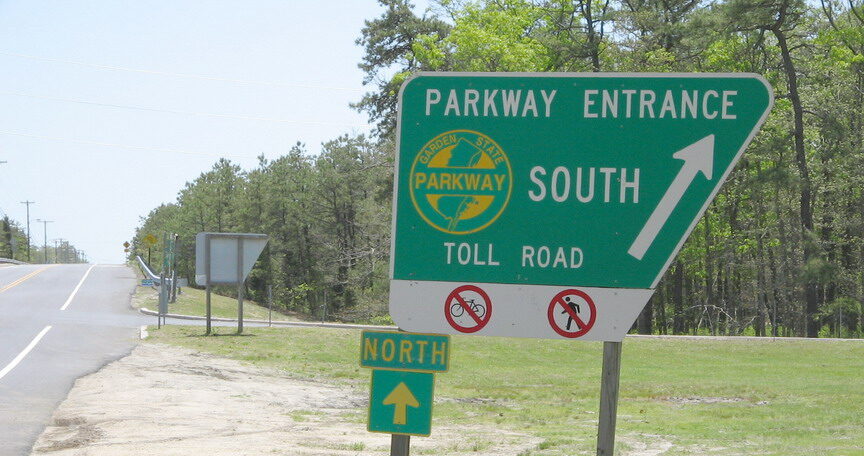
12:01 a.m. Jan. 1 is when tolls will increase on the New Jersey Turnpike and Garden State Parkway with tolls on the Port Authority of New York and New Jersey bridge and tunnel crossings following on 12:01 a.m. Jan. 4.
An across-the-board average three percent increase is to happen on the Turnpike and Parkway as passed by the New Jersey Turnpike Board of Commissioners Nov. 18. The average toll on the Turnpike, based on distance, is to go up 16 cents.
The increase is eight cents at the Parkway’s barrier toll plazas like Bloomfield’s Essex and Hillside/Union’s Union plazas. There is to be a comparable increase on the Parkway’s ramp toll plazas in Bloomfield (Exit 147) East Orange (Exit 145) Newark (Exit 144) and Irvington (exits 142 and 141).
The increases are graded on whether one pays cash or uses E-Z Pass, whether one is riding a motorcycle or driving a motor vehicle and by the number of the vehicle’s axles.
The increase is to generate $2.3 billion to pay for increased operating costs.
Port Authority will hike tolls on the Lincoln and Holland tunnels, the George Washington, Bayonne and Goethals bridges and Outerbridge Crossing three days later by three percent or 25 cents. It will “wash, rinse and repeat” in 2027 and 2028.
The annual indexed increases will generate $45 billion for the 2026-35 plan that will make up for revenue losses from the 2020 COVID-19 pandemic. inflation and capital improvements as passed by the PANYNJ Board of Directors Dec. 19. The capital improvements include replacing Newark Liberty International Airport Terminal B and increasing PATH weekend/major holiday frequency. (The PATH extension to EWR and opening a South Ward station is not on the immediate project list.)
The 10-year, $45 billion plan calls for some off peak E-Z Pass truck discounts to disappear on June 30. The PATH fare is to go up 25 cents – to $3.25 – May 3. (The Metropolitan Transportation Authority’s base NYC Subway fare, by comparison, is to go up 10 cents to $3 Jan. 4.)
Farewell MetroCard, Hello OMNY
Both the PA and MTA-NYC Subway will stop issuing MetroCards from Newark Penn Station and throughout the region Jan. 1. Riders who still have money on the plastic coated and magnetized striped paper card will be honored until the funds run out or Dec. 31, 2026 – whichever comes first. Refunds may be accepted by the MTA until Dec. 31, 2028.
The MetroCard/OMNY/Tap to Pay switch has been 10 years in the making. MetroCard machines have been gradually replaced at Newark Penn and elsewhere since May.
The New York Transit Museum has been holding a “FAREwell MetroCard” exhibit on the card, its successor to the token and the card’s cultural impact since Dec. 17. The car’s usual blue on yellow obverse and often advertising reverse have been subjected to being on merchandise and clothing. One person published a book around 2000 to fold the cards into origami animals.
Transportation reviewer and YouTuber Miles Taylor and sidekick Jeremy Zork set a perhaps unbreakable distance record on a single MetroCard swipe in May. “Miles in Transit” spent eight hours on three transit authorities to go from Carmel, N.Y. north of Brewster to Long Island’s Patchogue.
Becoming “Penny-Less.”
2026 will be the first year since 1793 that the U.S. Mint will not be producing the One Cent coin – the penny. The end of the 232-year line came with a ceremonial batch struck at the Philadelphia Mint Nov. 12.
Secretary of the Treasury Scott Bessent, on behalf of the President Donald Trump administration, ordered the suspension of minting pennies earlier this year. The administration’s grounds were that it costs 3.69 cents to mint each copper clad zinc coin.
To be clear, the one cent coin remains legal tender. Their presence in our pockets, however, will diminish over the years. One may have noticed that retailers this autumn, citing spot penny shortages, have posted signs asking customers to pay either in exact change or electronically.
Rounding up or down by a nickel – five cents – will be a common part of trash transactions. Exact pay will continue through credit, debit or SNAP “Food Stamp” cards or electronic apps.
SNAP Restrictions
Some of the 850,000 members of New Jersey’s “Families First” Supplemental Nutrition Assistance Program may have to provide regular proof of employment, training and/or volunteering after Jan. 1.
The state Department of Community Affairs, which conducts Families First SNAP here, has been asked by the U.S. Department of Education to ask working-age recipients 18-64-years-old that have expended 80 hours a month looking for work, taking classes and/or volunteering. This is from a clause of a bill passed by Congress in exchange for the Agriculture Department to fund its part of SNAP until next November.
Congress and the Trump Administration said that the workfare proof is a means to fight fraud and abuse. The state, however, has asked about the fate of recipients who do not meet the Able-Bodied Adults without Dependents category. NJ DCA is not currently part of a 13-state pilot program that prohibits purchasing “sugary/energy drinks or snacks” with SNAP.
NJ DCA has meanwhile passed along benefit cost of living adjustments and offers an anti-theft card lock feature.
Other changes include increases in federal Social Security benefits and a rise in the state gasoline tax.