BY WALTER ELLIOTT
NEWARK – The press time consensus to Operation Epic Fury, unleashed on Iran Feb. 28, is just beginning. It is too early to know how long and at what cost the armed forces of the United States and Israel will be engaged until a goal is reached.
Epic Fury’s effects, however, are starting to show up in gasoline prices, in timely arrival of some goods and in travel plans.
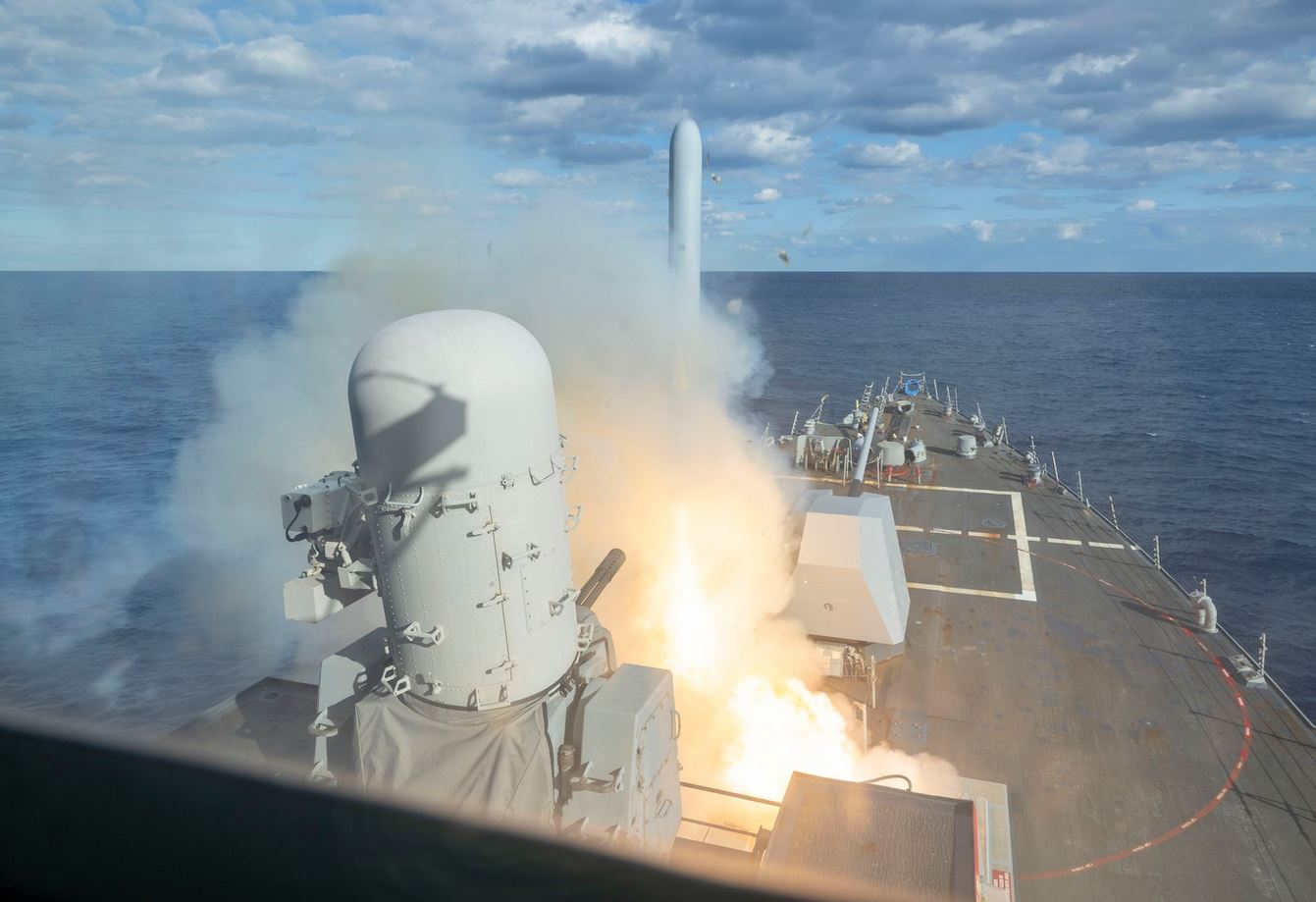
Most people in “Local Talk Land” and in the Eastern Time Zone awoke to this nation’s latest armed conflict – it is a war but not by official name – Saturday morning. Missiles from U.S. and Israeli warships began to strike mostly military targets in Iran. Iran’s missile launch sites, bases and related infrastructure were being taken out as swiftly as possible.
“Mostly” is the operative term since Iran’s ruling clerics and high government officials are being targeted for death – sometimes in populated residential areas.
The Israel Defense Force said, on Sunday, that they had killed Supreme Leader Ayatollah Ali Khamenei in his Tehran compound Saturday morning local time. President Donald Trump and Iranian Tasim state news agency confirmed the 37-year leader’s death.
The IDF, on March 3, said its air force had struck the Assembly of Experts building in Qom where 88 clerics were to meet to pick Khamenei’s successor. It is not clear whether any were in the building at the time, let alone whether any were injured or killed.
The Israeli Air Force strike underscores it and the USAF’s claim that they have control of Iran’s air space. The “Islamic Republic” is meanwhile ruled by three people for the interim.
Iran’s ruling regime is going to use up all of its amendments, sending missiles and drones to hit U.S. and allied military bases in other Middle Eastern countries. One such drone struck a British base on the Mediterranean island of Malta. The United Kingdom is allowing U.S. aircraft to be refueled and supplied on the British Isles.
Some of Iran’s drones have damaged the U.S. Embassy in Saudi Arabia, prompting the State Department to order all nonessential Americans to leave the Middle East or shelter in place. Some nationals have been doing just that in Abu Dhabi due to airlines suspending their service there and with several other countries.
The IDF has been striking Hezbollah bases in Lebanon and bringing its army troops back into Southern Lebanon. Hezbollah is supplied by Iran and is considered its terrorist proxy. It is not clear whether the six-month-old Israel-Hezbollah ceasefire which President Trump had brokered is dead.
President Trump, in his prerecorded Feb. 28 national address, said that negotiations with Iran over trading the halt of nuclear development for sanctions relief had been going nowhere. He said that Iran has ballistic missiles not to be aimed for Israel but for the U.S. and other Western nations. Some expert observers, however, said that Iran’s ICBM missiles are some nine years away from being operational.
While decapitating Iran’s military is the first Epic Fury goal, Turm has hinted at regime change – preferably by Iranians from within the country. Internal revolution, given the U.S. track record of regime change in the last 70 years, seem to be more desirable than implementing democracy from outside.
As far as preventing “a forever war,” Trump has said that Epic Fury will last four to five weeks. The question then becomes what will happen should the conflict last longer.
There are fuel tankers and container ships who are not passing through the Strait of Hormuz for fear of being hit by combatants. Only ships flying under Russian and Chinese flags are willing to take that risk through that 30-mile wide strait. Insurance companies have meanwhile canceled those ships’ policies.
The price of petroleum has already gone up 10 cents a gallon as of March 3 and a 55-gallon drum of crude oil has reached $85. Oil and liquid natural gas prices are sure to climb should the conflict is counted in months instead of weeks.
Some countries – including China, India and Cuba – may be feeling more severe gas pain due to their dependence on Middle Eastern oil. The Trump’ administration’s capture of Venezuela oil tankers may make their search for suppliers more difficult.
The “war” (at least until the U.S. 1976 War Powers Act is employed) may also affect the sports world.
The FIA, which sanctions Formula One, is making daily calls with its affected national racing clubs. The Bahrain and Saudi Arabian GPs, currently set for April 10-12 and 17-19, may have to be postponed or canceled.
Tennis players and officials who came to the United Arab Emirates for an STP Challenge meet find themselves halting matches due to drones and generally being stranded there.
The Iranian national soccer team’s participation in the FIFA World Cup here may be problematic. The team is to compete in North America in June.
Perhaps the War Powers Act may be passed by Congress in the meantime. Congress, after the Vietnam War, created the act to ensure that the President checks back with them to approve any armed conflict.
Congress has the Constitutional power to declare war – but both the legislative and executive branches of the federal government have become lax in its enforcement.
The act may be a moot point should the President vetoes Congress’ bill. Any veto has to be overridden with at least 60 votes in the U.S. Senate – which may be had to achieve, given the narrow Republican-Democratic party split there.
Then there is the increasing death toll.
As of March 2, six U.S. troops have been killed and 18 injured from Iranian strikes on bases. An estimated 800 Iranians have been killed. The figure includes a reported 150 killed from a missile strike on a girls’ primary school in Minab, southern Iran.
The Department of Defense/War said that three F-15s were shot down by friendly fire over Kuwait. All six crew members ejected safely.
“Local Talk” sends its condolences to relatives of the so far six U.S. troops and families of killed innocents.